Friday, June 28, 2013

What fishing taught me about business.


Despite the fact that I live in NYC I am to be able to fish quiet often. We pull largemouth bass out of the lakes in Central Park, Striped Bass from the East River and I get to go off shore fishing south of Long Island for really big Tuna and Mahi Mahi.
Some time-tested approaches to fishing turn out to work really well in business, and here are some tips:
1.    Always have lines in the water:
 
Last summer I was lucky enough to get on a friend’s boat at 3:00 AM to go 100 miles out to the Hudson Canyon for tuna fishing. After the 3 hour trip to the appointed spot we discussed at length the underwater topography using GPS, the surface temperature of the water looking for “breaks” that hold bait fish and discussed at length what kind of rig to use – all trying to increase the chances of our success.
One astute member of the party said “Hey guys – if don’t get some lines in the water I guarantee you that we will have 0% chance of catching fish.”
My take-away for business is to always be engaged in activities that can lead directly to revenue generation, or have “lines in the water”.  Do not get overly distracted with strategy, planning and lots of internal meetings at the expense of actually conducting your business. 
2.    Learn to read the water:
Fish of all sizes, from small trout in Colorado streams to trophy stripped bass off Montuak share on trait – they’re predictable when it comes to feeding. Fish like to sit in still water next to moving water or on a “rip line” when looking for food. It limits their need to expend energy while seeking their next meal. Also makes for an excellent place to fish.
So I’ve learned to “read the water” in business – to know where concentrations of business opportunities might be. Like going to industry events and “meet-ups” where smart people are talking about innovative ideas. People feed there on these ideas, and it’s a good place to start business conversations.
3.    Try everything in the tackle box:
From my dry flies / nymphs for trout to “spreader bars” that target giant blue fin tuna I have tons of different tackle. People ask me all the time “What’s going to catch the fish?” I can honestly say I have caught fish on every lure / live bait rig I own – but I can never tell what is going to work or when.
So like in fishing – I change up my sales and marketing approach / offer often when it is not producing the desired result. Some entrepreneurs call it “pivoting” your business model. I like to try different approaches until I “hook up” as we say on the boat.
4.    Be patient and enjoy the process:
I have a really short attention span, and get frustrated when I don’t succeed. But getting upset about not catching fish has an inverse effect on actually catching fish. Somehow they just know! So I now I like sit back and enjoy the view and solitude when fishing. Once in a while I actually catch some nice fish. That why it is called “fishing” not “catching.”
So in business I try to enjoy the process of meeting and talking to lots and lots of people. Once in a while they turn into clients and profitable business relationships. Then I can yell “Fish on!” – oh wait, I have to save that for this weekend on the boat.

Wednesday, June 5, 2013

Last year when the Dollar Shave Club came out with its streamed ad I wasn't sure if it was some clever spoof, a parody or a legitimate way to address a real marketing opportunity in a really fun way.

The original spot "Our blades are f***ing great" is clever and memorable. It has garnered over 10 million views on You Tube to date, and created a legitimate business. It won the "Best-Out-of-Nowhere Video Campaign" at the 2012 Ad Age Viral Video Awards.

The company is based in Santa Monica, CA and delivers personal grooming products, such as discounted razor blades by by mail. The company operates on a member subscription for home delivery model rather than selling through traditional retail channels. It was founded by Mark Levine and Michael Dubin in July of 2011.

But enough about their business - they guys just jumped into the shock-and-awe school of marketing with their brand new video “Let’s Talk About # 2” promoting their new product “One Wipe Charlies” – a butt wipe made for men. No kidding.
While they kept the same irreverent approach that won them so much attention the first time around – they really stepped over the line of acceptable taste with both this product and the promotional video. A better way to wipe your bottom – did anyone wake up this morning with this “need state?”

I think they could have addressed lots of other more pressing HBA needs of men – like a cheap version of Minoxidil for hair loss or body wash for guys over age 25. We all know there are plenty of laughs waiting at the expense of bald guys with BO, delivered in a really nice and tasteful way of course.

But what do I know? The new spot has over 442,000 views in its first 24 hours. 

Thursday, April 18, 2013

A whacky storyline follows a frog. Remarkable content results.

It was Seth Godin raised the idea of "remarkable content" in his book Purple Cow. Godin said the key to creating successful content is to find a way to stand out - to be the purple cow in a  field
of monochrome Holsteins. Remarkable content should motivate people to want to read it, share it and comment on it.

The "Follow the Frog" spot from the Rainforest Alliance fits this description. It has over 1.1 million views on You Tube to date and still growing. So what's the big deal here?

The Rainforest Alliance went out on a limb with this spot. First it is over three minutes long. A viewer has to pay attention to "get it." It makes fun of earth-friendly / do-good people, plays on guilt and apathy, and then goes around the bend with a "...here's what you're not going to do..." fantasy storyline.

The spot ends up telling a very compelling story, that makes for quite remarkable content. It has an unpretentious beginning, a zany middle, and a great end with strong brand message and call-to-action: "Follow the frog." It is funny and compelling all at the same time. The editing is choppy, and the quick cuts will make most people dizzy. But it really works. It's remarkable. Kudos to director Max Joseph.

It is amazing how much content these days is simply re-purposed, re-packaged, fails to tell a compelling story, has nothing to do with a brand message or simply plays it safe and just does not get noticed. Maybe that's the price we've paid for our overwhelming fascination with technology, smart phone gadgets and 140 character micro messaging via Twitter.

Monday, April 1, 2013

Thrill and Delight Your Customers.


I had a really bad customer experience with Verizon Wireless last week. While trying to work my through the issue, it got me thinking about ways to thrill and delight customers.
First – Try hard to treat your current customers well. They are the nice people who already buy your products / services, and can be your best “brand advocates” or big time “brand detractors” in the wide world of social media.
It  started when Verizon offered me a 4G upgrade last week on my broadband ISP account. 
The customer experience "went south"  when I tried to activate it - following the quick start instructions. Failing that effort, I spent two hours on the phone with Verizon and another two hours in a Verizon store trying to install and troubleshoot a new Pantech UML 295. Fives sets of people tried to get the device to work, to no avail. At the end a store manager said "enough is enough" and upgraded me to a mobile "hot spot' device.
Second – Offer high quality products / services. Seem obvious. But Verizon Wireless apparently failed to QA test this new new device with its online software, on a very popular hardware / OS platform – a MacBook Pro with the most recent version of OS X.
All the Verizon employees I spoke to just could not get the device to work for Internet access. Could have been a VZ access manager software version incompatibility issue, who knows?
Third – Have a well-defined problem resolution process. Empower customer-facing service people with what ever they need to resolve problems. This did not happen with Verizon. The hardware / software combo I was dealing with was just not going to work. Maybe the failure was the result of a low-level nuclear electro-magnetic pulse blast from North Korea - that adversely impacted the Pantech plant in South Korea. 
Who knows what Kim Jong-un is up to these days with all that belligerent rhetoric?
So now I have a Verizon “Jetpack” mobile hot spot. The assistant manager of the Verizon store here in NYC took pity on me. She told me to forget the broadband device and suggested the mobile hot-spot solution. It appeared to be a "work-around" solution she came up with, and for that I am thankful.

Monday, March 18, 2013

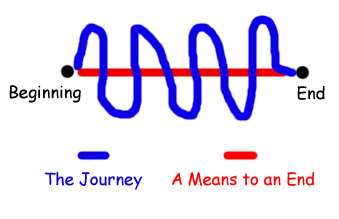
BIg Data: Best Used as a Means to an End?


Is “big data” a means to and end or an end in itself?
Big data / data collection / data analysis seem to be “the next big thing” and what has lots of people talking these days. Much is being written about the copious amount of data being collected, how little of this data is actually being analyzed for any useful purpose
All this begs the most basic question: Does “big data” really support better decision-making, improved outcomes, less risk exposure, and more efficient deployment of scarce resources – all to help drive long-term profitable growth for businesses?
A recent article in the WSJ talked about how Auto Zone is using data analysis to optimize its retail supply chain and improve the chances store visitors will walk out with a purchase. Another example was given around optimizing wind-turbine performance. All good, but hardly earth shattering developments.
Another article focused on the data-crazed vibe around SXSW last week entitled  “Who Rules the Data?”  Many tech firms are rushing to collect all sorts of data, display it close to the body (Google Glass) and even placing devices to track conference participants whereabouts and even how much time they spent sitting or standing in the porta-potties on site. Here the focus was on privacy issues, pardon the pun.
Chances are if both IT and marketing types spent a little more time linking data collection / analysis with informing smarter decision making (and tracking outcomes to inform future actions) for senior management – we’d all be in a better place: More efficient businesses that will grow, create jobs and fuel economic prosperity.
Now that’s a data point worthy of further consideration.

Sunday, March 10, 2013

The Art of Making the Complicated Simple

One of the most undervalued skills that any marketer can have is making the complicated simple.

American businesses seem to thrive on making things as complicated as possible. Just try getting through an entire issue of The New Yorker or reading the owner's manual that come with your next major appliance with any sense of how to fix the darn thing if it breaks down.

Hats off to the Wall Street Journal for demystifying the whole papal conclave / election process. I know that the "white smoke" signals the successful completion of the process, but I had no idea what the process steps were inside the Sistine Chapel to get there.

I love the whole idea of the "info-graphic" medium - a description of something that is simple without reducing the storyline to a 140 character Twitter post that coveys nothing of value. After reading this article I now get how it works, when it will happen, where and who will be involved. All the basic elements of a story.

This approach may be an excellent marketing tool for a whole variety of business sectors. Maybe someday it will help me explain what "re-balancing an investment portfolio" means to someone who does not have an MBA.

Wednesday, March 6, 2013

Square Inc. Getting it by giving it away.

Square Inc. is a privately held electronic payment service that is doing a great job of getting marketing share / product distribution by "giving it away" - literally.

Square consists of a small card reader that can plug into a smart phone or tablet device with two apps: Square Register and Square Wallet. The register app accepts credit cards using the card reader.

It is amazingly easy to register for this product and get it for free online, or stop by your local Starbucks and pick one up for $ 10 - which is then credited to you bank account once you start using it. Might help that Starbucks CEO Howard Schultz just invested $ 25 million in the firm, and as a result he got a seat on their board.

Square Wallet app allows people to use their smart phone a cash free mobile payment device, competing with the likes Google Wallet.

Signing up for the Square Register is a delight - they have an amazingly simple consumer interface and registration process, including identity verification when you enter your bank account information. How did they know where I lived back in 1992?

And best yet is their simple pricing model: Either 2.75% per swipe, or a monthly flat fee of $ 275 with 0% per swipe. This must have the Banks and their "merchant services" units shaking their heads, and watching their market share do a nose dive as a result of this innovative offering.