Thursday, March 19, 2015

Growth Hacking: Expanding Beyond the Silicon Valley.


“Growth hacking” originated in the Silicon Valley, where start-ups approached marketing by focusing on low cost and innovative ways to create awareness and attract customers to their unknown companies.

The practice of growth hacking eschews traditional, more expensive advertising and marketing in favor of search engine optimization, web analytics and content marketing to attract potential customers (or simply be easier to find on the web) versus paid promotional messages. In many ways, it is more about attraction versus promotion, with a healthy dose of data analytics thrown in.

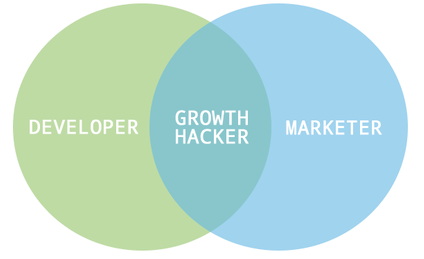
Famed Bay Area tech blogger Andrew Chen has described a growth hacker as being a hybrid of marketer and coder. Chen observed: A growth hacker asks the traditional question of “How do I get customers for my product?” and then answers with A/B tests, landing pages and e-mail bounce / open rates. 

A crop of start-ups, ignoring traditional marketing and advertising, have used growth hacking and disruptive marketing to create multi-billion dollar valuations, ranging from Twitter and Linked In, to Uber and airbnb.

As a result, does the growth hacking approach leave older and more traditional business sectors on the sidelines? Is the practice restricted to digital marketing efforts?

Hardly, as growth hacking can be adopted as a mindset of innovation, a commitment to testing new approaches to attracting and engaging customers, then identifying and expanding the “winning” tactics while quickly abandoning those that don’t work.

Marketing is fast becoming equal parts art and science in the spirit of growth hacking, as clearly detailed by McKinsey & Company in their recent report "The dawn of marketing's new golden age."


The Economist Group is an excellent example of an old-line publishing company that is aggressively growth hacking its way into the 21st century. This venerable, 172-year-old brand has made great strides in developing innovative marketing strategies to engage consumers and the B2B community.

As Economist Group President Paul Rossi noted late last year to Capital NY, “The key model that will change the dynamics of the media business is paid content. The ad side of the business will continue to be pressured by the abundance of inventory and data. The likes of content marketing and event sponsorship will be increasingly important to media businesses.”


In keeping up with consumers who have greatly increased their use of smart phones, the Economist has launched a full range of apps to deliver its content, including the Economist Espresso, the first daily news offering from the publication in its history. The app offers a morning news briefing that “outlines what is on the global agenda in the coming day, what to look out for in business, finance and politics and, most important, what to make of it.”

Other Economist apps include the “Anthology Series,” featuring collections of Economist articles on key issues; “Traveler Briefing,” with essential country backgrounds; and even a GMAT tutor prep course with “adaptive online learning.” 

One of the best venues the Economist has found to leverage editorial firepower and build its brand in the B2B community are its live events, with topics ranging from marketing best practices to addressing trade issues, or from alternative finance to healthcare and higher education. 

Recently the Economist sponsored the 
"The Big Rethink" - The age of the Entrepreneurial CMO (Chief Marketing Officer) in NYC, which featured an eclectic mix of Fortune 500 companies from Cisco to Goldman Sachs and IBM, as well as leaders of some spunky start-up firms.

The panelists, moderated by savvy Economist writers, addressed issues ranging from embracing the growth of mobile communication to the digital evolution of marketing, and from defining the role of marketing in corporate America to marketing spend accountability.


The tech start-up community has also been big on peer-to-peer, in-person meetings, many of which are called Meet-ups. They bring together like-minded people to hear thought leaders share their start-up experiences and knowledge, allowing for networking opportunities.


These events are an open-source venue for intellectual capital, as exemplified by the NY Tech Meet-up, which has over 42,000 members and over 700 in attendance at each of its monthly events.  

Dozens of other NYC meet-ups gather the best and brightest in both speakers and attendees, including Data Driven NYC and Hardwired NYC (both run by Matt Turck from VC firm FirstMark Capital) which focus on tech start-ups that create and manufacture products, including those in the IoT (internet of things) sector. 


In San Francisco and NYC, a well-established law firm is using growth-hacking events to build its presence quite effectively in the tech start-up and venture capital communities. Orrick, Herrington & Sutcliffe traces its roots back to 1863 and is the oldest, continuously operating law firm in San Francisco, with over 1100 lawyers in 25 offices worldwide.

Professional referrals have long been the order of the day for finding a lawyer. Orrick sought to go beyond this approach for building business by appealing directly to the fast-moving entrepreneurs running start-ups in the Silicon Valley and Silicon Alley in NYC.

Orrick created “Total Access” events to feature panels of experts discussing issues of interest to start-up entrepreneurs and venture capitalist alike. Topics range from securing start-up financing to managing a company board, as were discussed recently in NYC.


Danielle Weinblatt (Take the Interview) and Cheryl Swirnow (Sherpaa)
These events allow for great networking opportunities for both participants and panelists. The interactions between entrepreneurs, venture capitalists, potential investors and lawyers have likely spawned and fostered many business deals, with a low-key presence from Orrick partners and the firm’s marketing team. This is a testament that face-to-face marketing is alive and well in the tech-focused 21st century.

Back at the Economist CMO event - Matthew Bishop (Globalization Editor) asked Ogilvy & Mather ad agency Chairman Miles Young to comment on the state of marketing in 2015:

“The 30 second TV ad is dead...The most important thing marketing
professionals need today is a strong content marketing strategy.”

 Matthew Bishop (Economist) and Miles Young (Ogilvy)
Looks like the leader of one of the world’s leading ad agencies is abandoning a “Mad Man” view of the world, in lieu of promoting a key tenant of growth hacking--an approach that would likely serve many large corporate marketing officers well.

Then again the Fortune 500 crowd is not renowned for being nimble and quick, and being able to pivot their business models – another key tenet of growth hacking. Maybe that’s one reason why the growth in equity valuations of many big companies (like IBM and GE) have severely lagged those of most successful (and growth hacking) tech start-ups.


Monday, February 23, 2015

Is Social Responsibility a Viable Start-Up Business Model?


Much has been written about the emergence and growing popularity of corporate social responsibility (CSR). This phenomenon has created "Impact Investors" who are seeking out companies that are intentionally designed to both make a profit and provide a measurable and accountable social good.
This trend can pose questions for entrepreneurs:
Is social responsibility a smart and viable business model? Can it achieve key goals like establishing a social good-focused MVP (minimum viable product), then attract customers, demonstrate traction in the marketplace, and ultimately help raise venture capital?
Can “doing good” translate to “doing well” and even help create a blockbuster company or so-called “unicorn” – a business worth $ 1 billion or more – on paper at least?
Turns out that using social responsibility as a business model can cut both ways, resulting in either failure or great success.
For example, this approach has not worked for SodaStream, an Israeli company that sells machines that turn tap water into sparkling soda using recyclable CO2 cartridges, designed and marketed with a special emphasis on sustainability.
Its soda machines have been marketed as being an “active green product.” This means consumers can reducing their carbon footprints every time they make a soda or sparkling water using it, versus buying canned / bottled beverage from the likes of Coke or Pepsi.

The company seemed destined for greater success when they hired former Nike executive and Harvard MBA Dan Birnbaum as CEO in 2007. Later, the company issued a highly successful IPO in 2010, raising over $109 million, becoming a darling of Wall Street. SodaStream enjoyed huge growth success in Europe, with significant household penetration in countries like Sweden.
In 2014 SodaStream tried to jump-start its business in the US by way of an expensive and splashy Super Bowl Ad. It featured saucy Hollywood superstar Scarlett Johansson, emphasizing an environmentally friendly message.
Unfortunately this Super Bowl ad did not work, in fact it bombed. The message did not resonate with US consumers, and failed to motivate people to buy SodaStream machines. Sales tumbled in the US by 40% last year.
Since then the company has retrenched, repositioning the brand to accent “stream,” with a new tagline Water Made Exciting. "I don't think we have it figured out yet" Mr. Birnbaum was recently quoted. "We're not perfect, but we're on the right path." He may be more than a little overly-optimistic. 

On-going take-over rumors by the likes of Pepsi have failed to materialize. The NY Times business section front page just featured a story on the woes of SodaStream, as well as their plan to introduce new fruit flavors and a litany of other new products for later this year in an attempt to halt their business misfortunes.
It appears that institutional investors and analysts do not share Mr. Birnbaum's view that the company is on the right track. The company's stock hit a new 52 week low this week. Listed on NASDAQ, SodaStream's shares have lost more than half their value in the last 12 months, which translates into $ 48.3 million in market cap that has simply vaporized.
The flip side of CSR as a success story is Burt’s Bees, which developed into a near billion-dollar "unicorn" after Clorox acquired the company back in 2007 for cash. 
Burt's Bees, an American personal care products company that describes itself as an “Earth Friendly, Natural Personal Care Company,” makes products for  health, beauty, and personal hygiene.
In 1984 Burt Shavitz, a beekeeper in Maine, met a 33-year-old single mother Roxanne Quimby, as she was hitchhiking to the post office in rural Dexter, Maine.
Roxanne offered to help Burt tend his bees, and the two hooked up both in romance and business and shortly thereafter they founded Burt’s Bees. The company became famous for its beeswax lip balm, lotions, soaps and shampoos. Its packaging, and eco-friendly marketing set it apart in the crowded health and beauty-aids market. (The bearded man on their packages is modeled after Mr. Shavitz.)
By 2007 the company made nearly 200 products for facial and body skin care, lip care, hair care, baby care, men’s grooming, and outdoor remedies. They were distributed in nearly 30,000 retail outlets including grocery stores and drug store chains across North America, UK,  Hong Kong and Taiwan.
From 2000 to 2007 sales soared from $23 million to $164 million at the privately-held company, far outpacing competitors as consumers moved towards products that promised organic and environmental benefits – the DNA of a socially-responsible company like Burt’s Bees.
Funny, it doesn't look like a unicorn.
Clorox saw a big opportunity in the market for “green products” (reflecting a socially responsible approach to life and business) and therefore was highly motivated to pay nearly $1 billion for Burt’s Bees. This was a bold move for a company best known for selling bleach, and strong smelling cleaning products. As stated on the Clorox website today: Burt’s Bees’ ultimate goal is to be the “greenest personal care company on earth.”

It appears that Clorox is reaping big growth and profits from its investment in Burt’s Bees, as the brand has become one of the crown jewel in the company’s product diversification strategy. Clorox shares have jumped + 77% since 2007, with Burt's Bees playing a big part in the company's "2020 Strategy" to drive long-term profitable growth in new categories, channels and countries.

Both companies are worth examining for start-ups considering the use of social responsibility as the core value proposition.
If social responsibility is to be used as a business model it should align with what consumers are looking for in terms of products and/or services, offer a compelling brand message and deliver a great user experience. This alignment is usually helpful in achieve key business objectives – like customer engagement and sales traction, which in turn feeds profitable growth.
This business formula is always music to the ears of the venture capital community, and may even conjure up dreams of the mythical unicorn for potential investors.


Tuesday, February 3, 2015

Disruption isn’t just for start-up companies.


Conventional wisdom these days points to the prominent role that disruptive business models play for start-ups. Using the “disruptive” play has upended many business sectors and created companies with huge marketplace valuations, from car services / taxis with Uber to the hotel business with airbnb.

Perhaps no business sector has been challenged more than the media business, in particular magazine publishing.

Paying homage to a master of disruption.
Consider one company at the center of media disruption storm: Time Inc. founded back in 1923 by Henry Luce, who was one of the original news-aggregators. He went on to build a highly profitable stable of magazines.

TIME was the first news magazine in the US Market. It emphasized brevity so a busy person could read it in an hour, launched with the tag line “Take Time – it’s brief.” Time Inc. enjoyed a meteoric rise for the next 80 years. Time became part of Time Warner in 1989, in turn becoming part of AOL when they purchased Time Warner for $ 164 billion in 2000.

As the Internet exploded flooding the market with compelling and competitive content offerings (many for free) - Time Inc. watched the circulation and ad revenues of its core titles including TIME, Fortune, Money and Sports Illustrated take a nosedive.

In June of last year Time Inc. was spun-off from it more profitable corporate parent Time Warner, following some tough restructuring moves that included the elimination of over 500 jobs.

Time Inc. CEO Joe Ripp
As Time Inc. CEO Joseph Ripp recently told Bloomberg “We’re in the content industry now, we’re not in the magazine industry anymore.” He went on “For quite a while Time Inc. had thought of itself being in the magazine industry…the moment you define yourself that way, you put yourself in a paper box.”

Time Inc.’s existence as a standalone entity will test both the sustainability of print advertising and the value of brand recognition in an ever-changing media landscape, where decades-old titles are competing with the likes of Buzz Feed and Vox, and new players are entering the crowded field every day.  

Moving forward Time Inc. will need to prove its ability to effectively disrupt its historic publishing business model, and find new ways to generate revenue.

To start, Time Inc. has announced plan to relocate from its iconic headquarters in mid-town to Brookfield Place at 225 Liberty Street in lower Manhattan. There are also reports that Time Inc. is making a huge and ambitious bet to become a tech company with some key outside hires (from the likes of Amazon) and announcement that it will be the first major publisher to accept bitcoin.

Newell Thompson
But Time Inc. is also taking a disruptive approach to redefining the way its core brands are doing business, including Time, Fortune, Money and Sports Illustrated. Enter Time’s Content Marketing & Strategies unit (CM&S) headed by Newell Thompson. He is a veteran publishing executive, who then spent fours years in start-ups before returning to Time Inc. in late 2010.

 “I understand the pain points of start-ups. It helped me grasp the importance of recognizing opportunities, and then pivoting quickly with products that could be successfully monetized” observed Newell.

He is taking a disruptive start-up mindset to building the content marketing suite of products for the Time Inc. News Group. Newell and his team are re-defining “magazine” from an ink-on-paper business to being a high-value content hub, one that leverages the distribution power of some of the world’s best know publishing brands.

"Cultural disruption is needed to expand our brands into areas where we can build value for marketers and avoid the commoditization model of media buying houses." said Newell. “We’re now in the business of selling brand-building ideas for our clients - by delivering powerful content and distribution.”


Newell is clearly on the inside at Time Inc. and out to disprove the conventional wisdom that traditional publishing companies can’t adopt new ideas and effectively monetize them. His charge is to help make CM&S an enterprise-level growth driver, something worthy of sharing with Wall Street.  

CM&S is helping create vertical thought leadership topics and conversations. The team is able to offer a unique combination of Time Inc.’s content creation assets and distribution network; coupled with a broader contributor network of writers, designers, photographers and videographers to built highly engaging content for their clients. 

As Time CEO Joe Ripp said “I have 2000 of the world’s best content producers in the world working for me, and our content can be produced and delivered in all sorts of different formats.”

Time Inc. has been in the story telling business for over 90 years, and they are exploring new ways to deliver these compelling stories to better engage audiences on behalf of their branded sponsors in the process.

While Newell acknowledges that the profit margins in digital media are much less than those of print media, he is helping carry the CM&S mission and message with infectious enthusiasm.

TIME is giving analysts a reason to take a hard look.
This type of disruptive innovation may the catalyst Time Inc. is looking for to propel its planned phoenix-like rise from the ashes, from the old world order of media companies.

A leading indicator of Time Inc.’s potential for success may be the 30%+ jump in the value of TIME stock since early October of last year. The stock is now trading near its 52 week high - impressive in light of the fact that equity analysts and institutional investors are a hard group to fool, as most people know.

Monday, February 2, 2015

12 Weeks To A 6-Figure Job: But What’s the Best Path?


Student at coder boot camp in NYC.
In late 2014 NPR issued a story called 
“12 weeks to a 6-figure job” featuring the explosive growth of a brand new kind of trade school: The immersive web-development program, also know as “coder boot camp.”

The NY Times wrote a similar story back in October called "Web-era trade schools, feeding a need for code."

And Crain's NY Business just issued a story  "Coding Schools aren't just for kids" about how Gen-X career changers are flocking to digital boot camps. Some are transitioning from related tech fields to in order to build digital products, while others are embracing technology that may have put them out of a job.

The promise is simple: For several thousands of dollars and an investment of 10-12 weeks, people can become job-ready web developers. At least 50 of these programs have sprung up worldwide, with over a dozen in the metro NYC area. They are all capitalizing on the explosive growth in demand for web and mobile app developers, and related positions.

The top programs tout they are placing a vast majority of their graduates in great jobs with salaries approaching six-figures in a fast growing field, at a fraction of the time and cost of getting a college degree in computer science program from a top-tier school like MIT or Stanford, or dozens of other of well regarded schools offering engineering / computer science majors like Rutgers or the NJ Institute of Technology.


But there is a murky side to this tech-focused “yellow-brick-road” – not all coding schools nor even the classes themselves are created equal. Some classes offer full time immersion-style teaching, while other are offered part time during evening and weekend hours. And there is no standard certification for the schools or graduation credential, like a BA or BS from an accredited university. And few coding schools offer hard data on actual placement rates or the entry-level salaries of their graduates.

Apple's new coding language: Swift
So with “caveat emptor” in mind, I went “shopping” recently for a simple part-time iOS Swift app development course in NYC. "Swift is an innovative new programming language for iOS and OS X with concise yet expressive syntax that produces lightning-fast apps" according to Apple.

I quickly found two Swift coding class offerings right in the heart of “Silicon Alley” in the Flatiron District, near Madison Square Park. 

One course was offered at what is likely the best known schools in the sector, the other at a smaller school just two blocks away. Both promised be ability to program fluently in Swift in 8-12 weeks, with tuition costing from $ 3,000 - $ 4,750.       

But a closer examination of the offerings and instructors revealed some telling differences. The larger well-know school is known for hiring part-time free-lance instructors, and this was the case with the mobile development course I learned about at a recent information session. In fact I got the feeling that instructor knew precious little about the school at all.

I know enough about programming that various languages share a common process, but I found it strange that the instructor had worked at Google and was therefore likely to be a strong advocate of Android, which is a primary competitor to Apple's iOS languages. 

The instructor is also a principal at a NYC-based "stealth" start-up scheduled to launch its main product this spring. So I was skeptical when he said he’d "be available at any time to answer student questions outside of the classroom sessions." The estimated class size: 20-25, which meant limited one-on-one attention from the primary instructor.

A few blocks away I found the smaller school offering a class of 5-7 people (more personal attention) with two full-time / dedicated instructors with a long history of iOS mobile development. They also talked about offering career advice and encouraged potential students to share any apps they might already be working on.

And as a non-tech person by background, they made the whole process seem approachable and inviting to me. They also offer an online learning management system with videos, reading materials, quizzes and assignments.

Other area schools are working with New York City to offer fellowships and provide free training to underrepresented groups in the tech community. They also offer part-time courses, corporate training and programs for high school students.

There are several websites that can act as a third-party resource for prospective students. A good place to start is coursereport.com founded by Living Social alumni Adam Lovallo and Liz Eggleston.

The site features reviews, tips for applying to the schools, and interviews with founders, students, and instructors.  All this information can help equip prospective students with insights that may be helpful when trying to figure out which boot camp is right for them.

A simple search function based on “topics” (coding language / discipline) and location yields a menu of schools. Each school is further profiled based on a general “about” description, course offerings, reviews and “news” which includes items like student profiles.

So if you’re considering pursuing web / app development courses from NYC to Austin, from San Francisco to Toronto – you’ll have plenty of choices and great professional prospects. 

But it will really pay to do some up-front planning, comparative shopping and due diligence, including visiting prospective coding schools and meeting the instructors before making a final decision on your new school.